

How to make a resume
In this article you will learn how to make a resume. Writing a resume that will make you stand out from the crowd and convince potential employers that you are someone they should interview at all costs is no easy task.
Hundreds of applications may be received for one job advertisement and the employer will in all likelihood spend little more than a few hours sifting through the mountain of resumes they receive. This means that your resume may well have less than a minute in which to grab the reader's attention and convince them to put you on the shortlist.
So how can you make your resume one of the chosen few? It goes without saying that first impressions are critically important. Your resume should be presented in bullet point form with a clean, uncluttered layout and plenty of white space, to make it easy on the eye. It should normally be no more than two pages in length - if you haven't been able to summarize your skills and experience effectively in that amount of space, it's probably too wordy and will fail to make the desired impact on the reader.
Your resume must be concisely worded and achievement oriented, with the most important information, such as key skills and most recent/most senior level experience, near the beginning, where it will draw the employer in and persuade them to read on. The reader must be able to find easily the information they require in order to assess the relevance of your application. If the data they need is not immediately obvious, they will in all likelihood simply move on to the next resume.
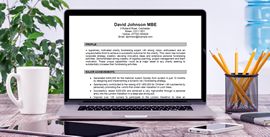
The most effective way of laying out your resume is to summarize, in a profile section at the top, your key skills, talents and experience, followed by a further summary highlighting your major career achievements. After that, outline your employment history in reverse chronological order (most recent first). You can then summarize your educational background and any relevant training programs completed, before providing details of other relevant skills, such as IT skills or foreign language ability, together with a few personal details.
Below are our tips on how to make a resume that will get you noticed, including what to include in each of the key sections of your resume, to give you the best chance of securing that all-important interview.
Resume Profile
The purpose of the "profile" section on your resume is to capture a potential employer's interest, such that they feel compelled to read on and consider your application seriously. Your profile should be a carefully worded summary, two or three sentences in length, of your key areas of experience (including the number of years' relevant experience), your principal skills and abilities and perhaps an indication of your career aspirations.
Your profile should be, in effect, a mini cover letter, without specific reference to a particular application. It should be written with your desired role firmly in mind, to ensure that the language you use reflects the type of profile sought by your target employers.
Resume Major achievements
It is helpful to follow the profile with a section dedicated to your major achievements. This serves to lift them out of the main body of your career history for maximum impact and encourages the employer to read on with interest. Ideally, include around three to six achievements in this section, unless your level of experience is particularly high and you feel there are further important successes to include. Clearly indicate which particular role/company each achievement belongs to.
List achievements for which you can claim genuine personal ownership and, wherever possible, quantify them in financial terms, such as "exceeded personal sales target by 30%" or "reduced overheads by £100,000, against a target of £75,000". Other achievements may revolve around recruiting and motivating successful teams, opening up new marketplaces for your company, or researching and developing new product areas, for example. As above, select the particular achievements you highlight here in line with the requirements of the type of role you wish to secure.
Experience / career history on Your Resume
The "experience/career history" section of your resume should provide the detail of your career to date, summarizing the companies you have worked for, in reverse date order, together with the principal responsibilities and achievements within your various roles. Include the company name (with ownership details, if appropriate) and a line describing what the company does and its turnover, unless it's a household name that needs no introduction.
You should give your job title(s), your reporting line and a summary of your principal responsibilities in each role, providing more data on the more recent roles than the earlier ones and leaving out any minor activities. Focus primarily on your most recent roles (the last ten years, typically). For earlier roles, it's sufficient simply to list the company name, the dates you worked there and your job title.
Couch the description of your responsibilities in the sort of language you might read in a job advertisement, rather than a dry, internal job description. If you have held similar responsibilities in a number of jobs, try to phrase them in different ways to make your summary more readable. Make sure that the overall impact of this section is results oriented, positive and persuasive.
Be sure to include some significant achievements in this section, whilst avoiding wholesale repetition of the information already provided in the "major achievements" section. Again, use numbers wherever you can to indicate the direct results of your efforts.
Resume Education / qualifications
Unless you have recent left school or university, or have only a very few years' work experience, you should summarize your education and qualifications after your career history, rather than before. List, in reverse chronological order, the principal qualifications you've obtained, together with the names and dates of the institutions you attended.
Generally, you should include all degree level qualifications and perhaps your final level qualifications at school, depending on how much work experience you have. Include any ongoing or part-time studies and any professional qualifications you are working towards. Include too any professional qualifications and relevant professional memberships, particularly those that were gained by examination.
Other skills
If you have other skills that are relevant to a potential employer, follow the section on education and qualifications with a new heading entitled, "other skills". Here you should list things like IT skills or foreign language ability (qualify the level - e.g. "fluent French" or "good spoken German").
Personal details on Your Resume
Your name, address and contact details (home telephone, mobile and e-mail address) should appear at the top of your resume. It is normally best to leave out date of birth, nationality and marital status.
You might want to include other information that might be relevant to a potential employer, such as having a full, clean driving license. The requirements of the roles you are applying for should determine what additional information, if any, you include.
Resume Hobbies and Interests
Some people like to include a final section on their hobbies and interests, but this is optional and opinions on its value are mixed. On the one hand, it adds a third dimension, but be aware of what the interests you list may say about your personal characteristics and whether they are ones that your target audience would find attractive.
And Finally
It goes without saying that your resume must be grammatically correct and error free. Run a spelling and grammar check on the computer and ideally have someone else read it for you too. This is your shop-window and any silly mistakes will count strongly against you.
Be sure to use a modern word processing package and print your resume onto good quality A4 paper. Never send a photocopy, as this will give the impression that you are sending out hundreds of resumes and putting little thought and effort into individual applications.
Always send out your resume with a cover letter, individually tailored to the particular position you are applying for. This should highlight the three or four main areas where your background and achievements fit most closely with the requirements of the role and should be designed to make the reader feel that your resume is one to which they should give full attention.
And finally, bear in mind that sometimes you may need to adapt your resume, to reflect the particular requirements of different roles you are considering. A couple of minor tweaks to change the emphasis slightly may make the difference between being called for interview or ending up on the reject pile.
- FREE Report: How to drastically improve your resume
- Want an interview-winning CV / resume? Our professional CV writing service can dramatically improve your chances of securing the job you desire
- How to write a resume index page
- Example resumes
- How to make a resume
- Free Resume Templates
- Free Cover Letter Samples and Resume Templates
- Which resume / CV format will work best for you?
- How to write a profile / summary for your resume / CV that will grab the reader's attention
- How to highlight your achievements on your resume / CV and improve your interview chances
- Sample resume objectives - Why use resume objective statements?
- Outline to make a resume
- Free Resume Formats
- Sample Teacher Resume
- Teacher Resume Templates
- Kindergarten Teacher Resume / Preschool Teacher Resume
- Elementary Teacher Resume Samples Examples
- Secondary / Middle School Teacher Resume
- Teacher's Assistant Resume
- Resume buzzwords and resume key words
- Teacher Skills For Resume
- Pharmaceutical Sales Resume Samples
- Special Event Co-ordinator Resume
- Project Manager Resume / CV